Token & ICO Platforms
ERC-20, ERC-721, ERC-1155, ERC-4626 vaults, ERC-721A optimised mints, vesting schedules, governance tokens, and compliant launch infrastructure (KYC gating, lockups, allowlists).
We build production-grade blockchain applications — audited Solidity and Move smart contracts, DeFi protocols, NFT and tokenisation platforms, Layer 2 rollups, and enterprise web3 — on Ethereum, Polygon, Arbitrum, Base, Optimism, and Solana, with security-first engineering and the audit-trail discipline regulators and treasuries actually require.
Foundry · Slither · Pre-audit hardened · Senior Solidity engineers
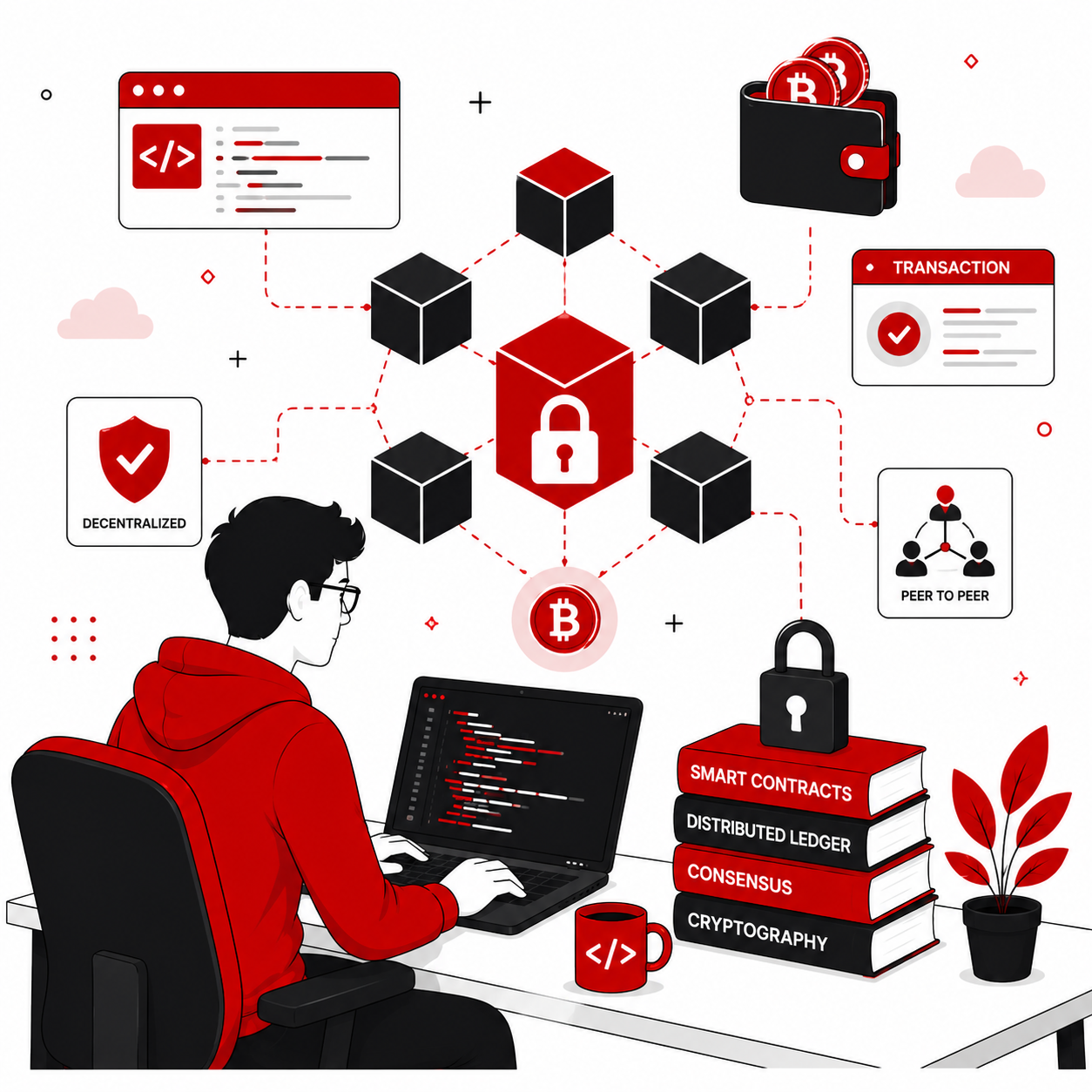
From audited token launches to DeFi protocols and enterprise tokenisation — engineered with the security-first rigour that adversarial environments demand.
ERC-20, ERC-721, ERC-1155, ERC-4626 vaults, ERC-721A optimised mints, vesting schedules, governance tokens, and compliant launch infrastructure (KYC gating, lockups, allowlists).
AMMs, lending protocols, yield aggregators, staking systems, perpetuals, RWA tokenisation — built with the security posture DeFi actually needs (invariants, fuzzing, formal-ish reasoning).
NFT minting, marketplaces, royalty enforcement, fractionalisation, dynamic NFTs, soul-bound tokens, and ERC-6551 token-bound accounts — backend + frontend + smart contracts.
Hyperledger Fabric / Besu deployments, permissioned EVM chains, supply-chain provenance, and tokenisation pilots for banks, treasuries, and corporates.
Pre-audit reviews, invariant testing with Foundry/Echidna, Slither static analysis, gas optimisation, and remediation work on existing contracts before public audit.
React/Next.js dApps with wagmi/viem, Account Abstraction (ERC-4337), social logins via Web3Auth/Magic, gasless transactions via Biconomy, and embedded smart-account wallets.
DeFi, NFT, real-world assets, supply chain, GameFi, treasury, DAO, and enterprise web3 across India and global markets.

DeFi & FinTech

NFT & Creator
Supply Chain

Real Estate / RWA

GameFi / EdTech

Healthcare Records

Provenance

Treasury & DAO
Modern smart-contract languages, audit-grade toolchains, oracles, indexers, and account-abstraction infrastructure.
A six-step rhythm engineered so smart contracts pass audits, dApps win users, and treasuries sleep at night.
We scope tokenomics, contract surface, oracle dependencies, upgrade strategy, and threat model — including economic attacks, MEV, governance attacks, and bridge risk.
Contract layout, proxy pattern (UUPS/Beacon), storage layout, access control (multisig, timelock, roles), upgrade governance, and event design for The Graph indexing.
Solidity/Move/Rust implementation with Foundry-based fuzz tests, invariant tests with Echidna, Slither/Mythril static analysis, and >95% coverage.
Gas optimisation, reentrancy + access control reviews, MEV mitigations, oracle manipulation tests, and remediation of any issues we find before external audit.
Mainnet/L2 deployment via Foundry scripts, multisig wallet handover, The Graph subgraph, dApp + admin console, and a public verifier (Sourcify, Etherscan).
On-chain monitoring (Tenderly, Defender), incident playbooks for paused/upgraded contracts, treasury operations support, and quarterly security reviews.
Six commitments that separate web3 projects that survive incidents — from ones that announce a "post-mortem" after their TVL disappears.
Smart contracts are public, immutable, and adversarial. We invest heavily in fuzzing, invariants, Slither/Mythril, and pre-audit reviews — because reverts at the audit stage cost real money.
We use Foundry as default — fast tests, fuzzing built in, invariants, cheatcodes for fork testing — the modern way to ship Solidity confidently.
Tenderly + Defender + custom monitoring scripts so you know within minutes if something unusual happens on your contracts — not days later via Twitter alerts.
We will tell you when a problem does not need a blockchain. When it does, we recommend the right L1/L2 mix — not the one with the largest ecosystem fund.
Architecture reviewed by Sundarapandi Muthupandi (CEO). The engineers who write your contracts are the ones who run the fuzz tests at 2 AM.
Weekly demos with deployed test-net contracts, direct access to engineers, signed SOWs with documented threat model, and predictable burn.
Pick the shape that matches whether you need a focused contract, a full protocol launch, or audit-remediation care.
Fixed-scope build of a specific contract set — ERC-20 with vesting, an NFT collection, a vault — with tests, Slither analysis, and testnet deployment.
Coordinated programme to design and build a full protocol — contracts, dApp, indexing, monitoring — with pre-audit hardening and mainnet deployment support.
Remediate audit findings, monitor live contracts, ship feature upgrades, and respond to incidents — under a predictable monthly retainer.
Representative blockchain projects engineered for D2C, RWA, NFT, settlement, GameFi, and provenance use cases.
ERC-1155 loyalty point system for a D2C brand on Polygon — gasless via Biconomy, redemption logic, expiry, and a customer-facing wallet with social login.
ERC-4626 vault tokenising real-world receivables — KYC-gated minting, allowlists, redemption windows, and Chainlink oracles for off-chain pricing.
ERC-721A optimised generative drop for an art project — Merkle-tree allowlists, reveal-after-mint, royalty enforcement, and a polished mint dApp.
Permissioned Besu chain for a remittance corridor pilot — atomic swaps, hashed-time-lock contracts, and a regulator-visible audit explorer.
On-chain item economy for a Web3 game on Base — minting, trading, soul-bound progression items, and an account-abstraction wallet for casual players.
Provenance and authenticity platform on Polygon for a premium consumer brand — QR-linked NFTs proving chain-of-custody from factory to consumer.
Common questions founders and corporates ask before committing to a blockchain build.